What is Complex PTSD?
You don’t decide to drink – your body reacts before your mind can think. What feels like relapse or failure may actually be a trauma response rooted in the nervous system. This article explores how Complex PTSD can quietly drive addiction and why compassion, not shame, is the place where healing begins.
From Susan’s Heart
For many years, addiction has often been framed as a moral failure. But Scripture tells us that God is “near to the broken hearted” and that He “binds up their wounds.”
As I have listened to people who serve on the front lines - police officers, military personnel, medical workers, and others - I have come to understand more clearly why repeated exposure to trauma can lead someone into addiction.
This kind of trauma not only affects the emotions; it reshapes the nervous system and the brain itself. Many are not seeking escape - they are seeking relief. That is why this first issue begins with neurological, brain-based trauma, often called Complex PTSD. It is only one doorway into a much larger conversation, and we will continue learning together about the many forms of pain people try to numb and the many ways God brings healing.
The heart of Detox with Jesus - and of this newsletter - is hope with direction. Over the years, I have attended gatherings where problems were accurately diagnosed, yet no clear path forward was offered. Here, we want to go further. We want to listen, to learn, and to walk toward solutions together.
We will continue inviting your voices, your experiences, and what God has been teaching you through life, study, counseling, prayer, and community. Why? Because the body of Christ was designed for shared healing- where many members, many gifts, and many hands work together under the headship and love of Jesus.
What is Complex Post Traumatic Stress Disorder?
Let’s look at neurological / brain-based trauma as one reason why a person might be drawn into addiction of one type or another.
- Repeated exposure to horror (police, detectives, military, emergency responders, medical staff, social workers, child protection workers, prison staff, therapists)
- Seeing abused, mutilated, dying, or terrified people – an ambulance driver, tow truck driver, etc
- Listening to traumatic stories day after day – and you can’t quit your job because you need money.
- Viewing images or videos the brain was never designed to process – ie. child rape and torture.
Do you see yourself on this list? Or someone you know? This is not only emotional pain.
This is injury to the nervous system and brain processing itself.
This is where Complex PTSD (C-PTSD) fits:
- The alarm system of the brain becomes stuck “on”
- The body stays in fight / flight / freeze (your limbic brain)
- The nervous system cannot return to safety on its own
- Triggers are no longer “thought-based” - they are body-based
Smells, sounds, tone of voice, facial expressions, children crying, a slammed door, certain times of day the body reacts before the mind can think.
Complex PTSD
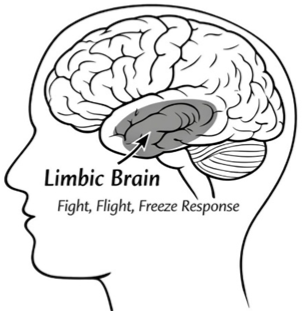
And so you are in that fight, flight or freeze response because your body has reacted before your brain can think. It’s not because you are a “moral” failure but every makes you feel otherwise.
What is Complex Trauma?
The following has been copied from Tim Fletcher’s website: https://www.timfletcher.ca/
“Trauma is not what happens to you. Trauma is what happens inside you as a result of what happens to you.” —Gabor Maté
Trauma is someone’s response to a deeply scary or harmful event that makes them unable to cope.
Complex Trauma (or C-PTSD) is defined as the response to an ongoing environment of danger where one never feels safe. This response constantly signals a stress response such as fight, flight, freeze, or fawn. It affects every aspect of a person -their bodies, relationships, brains and ability to have a spiritual connection. Tim Fletcher has identified over 85 Characteristics of Complex Trauma which may help you put the pieces together as to how it may be affecting you.
As a starting point, you may want to watch Tim’s video at bottom of this page on his website:
https://www.timfletcher.ca/characteristics-of-complex-trauma
Who is Tim Fletcher?
Tim Fletcher is the Founder and President of RE/ACT (Recovery Education for Addictions and Complex Trauma). He used his skills as a pastor and counsellor to develop a program to help the people he cared for overcome addiction. He realized the need for individuals to first become equipped with tools and then put those tools into practice in a healthy, safe and loving environment - and herein lies his unique skill.

Feature Story — “Real People. Real Journeys.”
In a video titled Protect Your Children, former UK undercover police detective Darren Ryan shares part of his story - one few people ever see, and even fewer are prepared to carry.
Darren worked in counterterrorism, organized crime, and later in online child protection, where each image he examined represented not only a crime scene, but a real child victim and a real offender.
Thousands upon thousands of these images passed before his eyes. It was work the human brain was never designed to absorb. Over time, the cost of repeatedly witnessing such darkness began to surface in his own life, eventually leading to Complex Post-Traumatic Stress Disorder, alcohol misuse, and the painful end of his career.
This conversation is not only about protecting children - it is also about understanding what unseen trauma can do to the human mind, heart, and home.
Resource Spotlight — “Learn, Grow, Heal”
Protect Your Children – The Story of Darren Ryan
In this deeply moving conversation, former UK undercover detective Darren Ryan opens a window into a world most people never see - and into a cost few ever consider. Darren spent years working in some of the highest-risk areas of policing: counterterrorism, organized crime, human trafficking, murder investigations, and covert operations. Yet the work that marked him most profoundly was investigating online child sexual abuse.

Darren describes sitting alone in a sealed room, day after day, reviewing not one or two images, but thousands upon thousands - each one representing a real child, a real crime, and a real offender. He speaks candidly about how no training can prepare the human mind for that kind of repeated exposure, and how that room, over time, changed him.
In the video, Darren shares how his journey into policing began after losing a close friend in the 9/11 attacks - a moment that shifted his entire sense of purpose. “People are all that matter,” he says. That conviction carried him into a career spent pursuing those who harm others, particularly children.
He also speaks openly about the internal battle of having to sit face-to-face with offenders, carrying the images he had seen, while remaining professional so that justice could be done and children protected.

This conversation is about far more than crime. It is about what repeated exposure to darkness does to the human brain and nervous system, about the unseen wounds carried by those who protect society, and about the moral, emotional, and neurological weight that often follows them home.
Darren has since written a book and now speaks publicly to raise awareness, educate families, and help others understand both how children can be protected - and how those who stand on the front lines are themselves deeply impacted.
This is a resource that informs, unsettles, and ultimately invites deeper understanding.
We encourage you to watch the full video and explore Darren’s work.
Family Faith in Action — “Parent Modeling Corner”
Former undercover detective Darren Ryan is careful to speak to parents not with accusation, but with reassurance. He acknowledges that loving parents are already doing what they can to protect their children - and that no parent can control every environment, every person, or every digital space their child may enter.
This is why he emphasizes relationship, awareness, and working together. In a world that is complex and constantly changing, protection was never meant to be carried by one family alone. Prevention is always better than healing after harm, and prevention grows strongest when families, communities, and support systems walk together.
This is the heart behind Detox with Jesus and our circles of support - people standing side by side to address real issues with truth, compassion, and shared responsibility.
With this understanding, we offer these practical steps as ways families can walk together - and with God - in creating greater safety, trust, and protection.

Protecting Our Children: A Parent’s Guide
Relationship. Awareness. Presence. Community.
1. Build the relationship first
A close, trusting relationship is a child’s greatest protection.Let your child know, often:
- they can talk to you about anything
- they will not be in trouble for telling the truth
- they have done nothing wrong by coming to you
A child who feels safe with you is far more likely to speak up early.
2. Keep communication open and ongoing
Talk naturally and regularly about:
- school, friends, and feelings
- gaming, apps, and social media
- what they enjoy and who they interact with
These should be everyday conversations, not one-time talks. Openness can be the lifeline that stops harm early.
3. Pay attention to changes
Be alert to sudden or ongoing changes such as:
- withdrawal, secrecy, anger, fear, or mood shifts
- changes in sleep, appetite, or school involvement
- loss of interest in things they once loved
These do not automatically mean abuse - but they often mean something needs loving attention.
4. Take the online world seriously
Online spaces are not separate from real life.People with harmful intent can:
- pretend to be children
- use games and chat platforms
- slowly build trust over time
The digital world is global. Online safety is now part of everyday parenting.
5. Be thoughtful about technology
Smartphones place the world - including its darkest corners - into a child’s private space.Whenever possible: delay smartphones and consider simple phones for calling and texting only.
If your child does have a device:
- use strong parental controls and age-appropriate settings
- block adult content
- monitor apps, games, and messaging platforms
- keep devices out of bedrooms
- turn off internet access at night
- regularly review what your child is searching and watching
Supervision is not mistrust. It is protection.
6. Treat online spaces like physical spaces
Ask yourself:
- “Would I allow this person access to my child in real life?”
- “Would I allow this interaction on a street corner or in my home?”
Help children understand:
- people can pretend to be someone they are not
- online relationships are not automatically safe relationships
The same wisdom used offline must be used online.
7. Remove shame. Act early. Seek support.
If your child tells you something difficult: thank them, stay calm, reassure them they did nothing wrong, and let them know you are there to protect them. Never scold a child for telling. Fear of punishment is one of the greatest silencers. Trust your instincts. Trust your child’s voice. Early attention can prevent deeper harm.
8. Model safety, faith, and presence
Let your home be a place of: emotional safety, listening, prayer and respect for boundaries. Children learn what safety looks like by living inside it. Protection is not only about rules. It is about presence.
A Closing Reminder for Parents
Children are still children - even when they are tech-savvy. Parents are still called to protect, guide, oversee, and equip. And no family was ever meant to carry this responsibility alone. Community, support, prayer, and shared wisdom are part of God’s design for protection.

Scripture Reflection — “God’s Word on the Matter”
God does not speak lightly about children, about hidden harm, or about those who carry heavy burdens. Scripture gives us both protection language and healing language - for families, for the wounded, and for those who have seen what no human heart was meant to carry.
Here are several passages that speak directly into this space.
Matthew 18:5–6God’s heart for children and their protection
“Whoever receives one little child like this in My name receives Me. But whoever causes one of these little ones who believe in Me to sin, it would be better for him if a millstone were hung around his neck, and he were drowned in the depth of the sea.”
➡ Jesus places immeasurable value on children and speaks with fierce clarity about their protection.
Psalm 34:18“The Lord is near to the broken hearted and saves those who are crushed in spirit.”
➡ God draws near not only to sin, but to injury - to crushed inner places.
Matthew 11:28–29“Come to Me, all you who labor and are heavy laden, and I will give you rest.”
➡ This invitation includes those burdened by what they have seen, known, or carried for others.
Psalm 147:3“He heals the broken hearted and binds up their wounds.”
➡ Some wounds are visible. Many are not. God binds both.
Ecclesiastes 4:9–12“Two are better than one… For if they fall, one will lift up his companion… A threefold cord is not quickly broken.”
➡ Protection and healing were never meant to be carried alone.
Galatians 6:2“Bear one another’s burdens and so fulfill the law of Christ.”
➡ Trauma, prevention, parenting, and healing all belong in community.
John 1:5“The light shines in the darkness, and the darkness did not overcome it.”
➡ Darkness is real. But it is not ultimate.
Ephesians 5:11–13“Have no fellowship with the unfruitful works of darkness, but rather expose them… all things that are exposed are made manifest by the light.”
➡ God’s light brings both protection and healing.
Takeaway thought:
God’s Word reminds us that He is both a fierce protector of the vulnerable and a gentle healer of the wounded. As families, and as a community, we are invited to walk in His light guarding what is precious, and bringing what is broken into His care.
Success Stories — “When God Steps In”
Darren’s story does not end in the dark room.
It begins to shift when he speaks about healing — not as something sudden or complete, but as something real, growing, and possible.
After years of carrying what no human mind was created to hold, Darren began to write. What started as private journaling slowly became a book. Not written to impress. Not written to sell. But, as he says, “a book I wish I had when I was broken.”
Writing became a way to take what was trapped inside and place it somewhere safe. A way to speak without being judged. A way to be honest. Over time, sharing those words — and hearing how they helped others — became part of his own healing.
Darren speaks openly about Complex PTSD, about alcohol, about the loss of his role, and about the identity crisis that followed. “Who are you when the uniform is gone?” he asks. Like many in the services and the military, his work had been his family. His badge had become part of his body. And when that world fell away, the loss was not only professional — it was deeply personal.
Yet in that unravelling, something new began to form.
He speaks of learning to ask for help. Of letting others see what was really happening. Of discovering that healing does not mean the past disappears — but that the weight can become lighter, and life can take a new path. Today, Darren is sober. He speaks publicly. He writes. And he uses his story not to relive the darkness, but to bring prevention before crisis, understanding before judgment, and hope before despair.
This is where we see God step in.
Not always by removing the pain — but by bringing presence, purpose, and people.
This is the heart of Detox with Jesus and Many Hands Make Light Work. When biological families or work families cannot carry what trauma creates, God begins to build something else: a living body of compassion. A circle of support. A community of hands and hearts willing to stand in the gap.
Because love does not abandon the wounded.
And healing does not happen in isolation.
Prayer Corner — “One Step at a Time”
Father God,
We come to You not with answers, but with open hands.
You see every hidden place. Every burden we have carried quietly.
Every image, memory, fear, and ache that has shaped us.
You are the defender of children.
You are near to the brokenhearted.
You are gentle with the wounded.
And You are faithful to place the lonely into family.
We ask You to shine Your light where darkness has tried to live.
To bring protection where there has been vulnerability.
To bring understanding where there has been confusion.
And to bring living, loving support where there has been isolation.
Teach us how to walk with one another.
Teach us how to listen.
Teach us how to notice.
And teach us how to become safe places for others.
For those who are overwhelmed, we ask for rest.
For those who are afraid, we ask for Your peace.
For those who are carrying trauma, we ask for gentle healing.
For families, we ask for wisdom and covering.
And for each person reading this today, we ask for one small, grace-filled step forward - the next right step - held in Your love.
In Jesus’ name,
Amen.


Many Hands, One Heart — “Community & Volunteer Spotlight”
As you come out of prayer, you may want to quietly reflect:
- Who has God used in my life when I needed support or understanding?
- Where do I sense God inviting me to step out of isolation and into connection?
- What kind of presence could I offer others - prayer, listening, encouragement, practical help?
- Is there a place where my story, my compassion, or my availability could become part of someone else’s healing?
Healing rarely grows in isolation. It most often grows in shared spaces.
Gentle Call-to-Action
(Many Hands Make Light Work / Detox with Jesus)
After prayer, the next step is often people.
Throughout Scripture, God answers cries for help not only with His presence but with His people. Hands. Voices. Listeners. Protectors. Intercessors. Encouragers. Friends.
Detox with Jesus and Many Hands Make Light Work exist to create living circles of support - places where burdens are shared, stories are honored, prayer is practiced, and no one is expected to heal alone.
Some are called to reach out because they are weary. Some are called to step forward because they are ready to serve. Most are both.
Whether your next step is asking for prayer, joining a circle of support, or exploring a volunteer role, we invite you to walk with us.
Because when many hands carry what is heavy, the weight becomes lighter and hope finds room to breathe.
Around the Site — “What’s New at DetoxWithJesus.ca”
Home:Come as you are –Jesus will give you ‘rest’.
About Us: Learn more about Detox with Jesus, our mission
Our Stories: Submit your testimony using our templates.
Meetings: Learn how to host your own group - calendar updates.
Many Hands: Explore volunteer roles and ways you can help.
God’s Army: Criteria for membership – ongoing training and resources
24/7 Prayer Calendar: Join the prayer team and bathe our communities in prayer.
Resources:Check out our starter kits – download and/or print!
Contact Us:Connect with us - send prayer requests or feedback.
Closing Blessing — “Until We Meet Again”
May the God who sees what is hidden and treasures what is fragile walk with you in the days ahead. Until we meet again, may you go knowing you are not alone, you are not forgotten, and you are deeply loved.
With love and faith, Susan 💜